Today's briefing
The watermark arrives: your AI copy now carries a signature
Anthropic details invisible marks in Claude's text. What that changes for a school, clinic or workshop that writes with AI — and what it doesn't.
The one that matters
Claude will start hiding a signature inside the text it writes for you
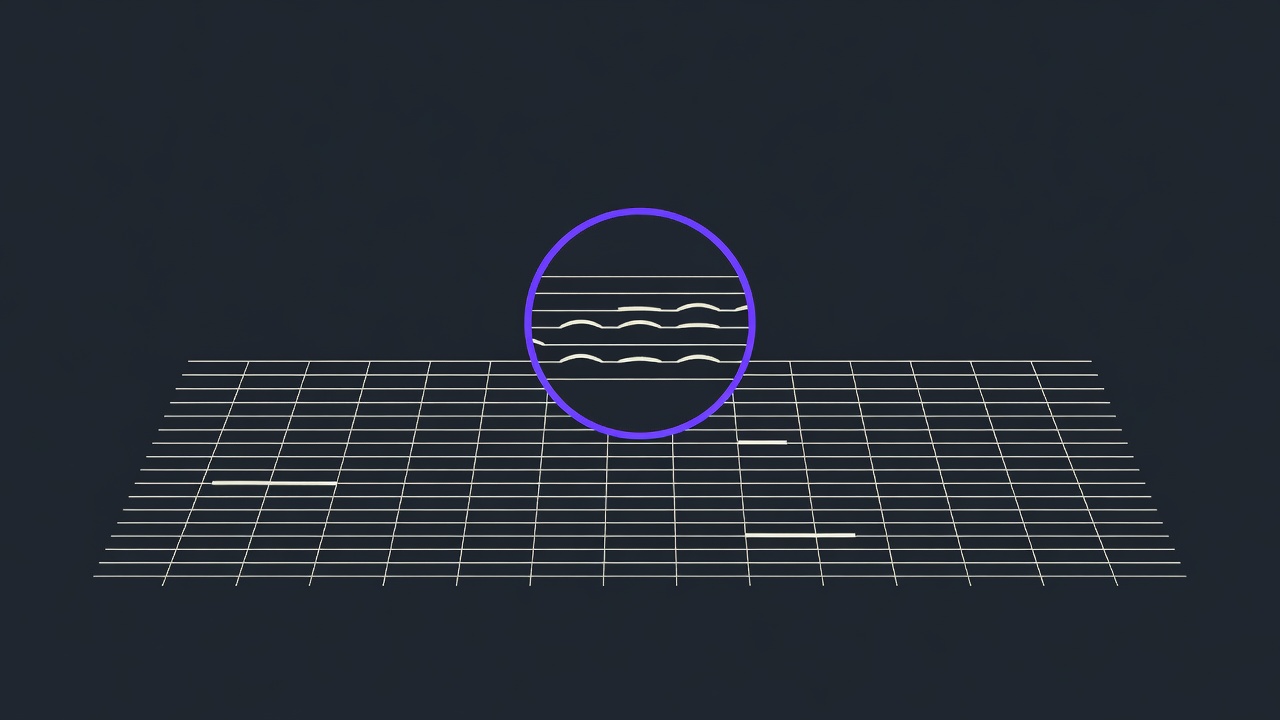
What happened, in plain words. On Friday, Anthropic explained how it intends to put invisible watermarks into text written by Claude. The company said the system is "a version of the SynthID-Text approach" — an open-source watermarking technology — and that the purpose is to comply with Europe's AI transparency rules. Nothing appears on the page. There is no badge, no disclaimer, no odd character. The mark lives in the statistical pattern of word choices, and software that knows what to look for can spot it afterwards.
What it actually means for your business
The honest answer for most readers is: less than the headlines suggest, but not nothing. It matters in exactly one situation — when a human being is claiming authorship of something a machine drafted, and someone later has a reason to check.
- A 600-student school sending AI-drafted newsletters, fee reminders and event notices: nobody will ever check. Carry on.
- The same school's staff drafting report-card comments or a board submission that goes out under the principal's name: worth a rule, because the claim of authorship is real.
- A 30-bed clinic drafting discharge instructions or patient follow-up messages: the marking is irrelevant. The clinical review by a doctor is the control that matters, and always was.
- A workshop with 40 staff writing tender responses, ISO documentation or a government grant application: this is the one to take seriously. Procurement bodies increasingly ask whether submissions are original work. Being caught out matters far more than any technical mark.
- An agency selling copywriting as human-written: your exposure is contractual, not technical. A client who suspects and checks has a stronger case than they had last week.
What it does not mean, and who is overstating it
It does not mean AI detection now works. The "AI detector" tools that schools and HR teams have been sold for two years remain unreliable and still wrongly accuse people — especially writers whose first language is not English. This announcement changes nothing about those products, and any vendor now pitching you a detection upgrade on the back of this news is selling a connection that does not exist.
It does not mean your published archive is affected — this concerns text generated going forward. It does not cover other companies' tools; this is one vendor marking its own output. And the announcement does not settle the practical question of who gets to run the detector and against what. That, not the watermark itself, is the detail worth watching over the next few months.
There is also a live argument among writers that marking may subtly degrade the prose. Treat that as unproven. Judge the output you get, not the debate.
What a sensible owner does this month
- Spend one hour writing a one-page rule. List the three or four places AI drafting is not allowed at your organisation — tender submissions, anything signed by a doctor or a principal, anything a client is paying for as original work. Everything else is fine and needs no ceremony.
- Ask your software vendors one written question: is text produced by your tool marked, and can it be detected? File the reply. This takes ten minutes and is genuinely useful if a dispute ever arises.
- If you serve European clients, add a plain line about AI assistance to your proposals and contracts. Disclosure is cheap; discovery is not.
- Buy nothing. No detection subscription. No "watermark removal" service — that is an arms race you lose, and in a tender the real risk was never detection, it was misrepresentation.
Your costs do not change. A business seat is still roughly ₹1,800–₹2,500, or about C$30–C$40, per user per month. This is a governance item, not a budget item.
Also worth knowing
-
An AI-generated security "autofix" became the way into Snowflake's Jira
A patch suggested by GitHub Copilot's automated fix feature turned out to enable a compromise rather than prevent one. The lesson is not "AI is dangerous" but "an AI suggestion is a suggestion" — if your in-house developer or outsourced IT vendor lets automated fixes merge without a human reviewing them, that is the setting to change this week. Ask your dev team directly: does anything reach production without a person approving it?
Hacker News ↗ -
A widely-read guide to switching off the AI features your software keeps adding
One of the most-discussed items of the week was simply how to disable AI assistants that vendors have pushed into everyday tools. This is a legitimate admin task, not a grumble: staff lose time fighting a sidebar nobody asked for, and worse, they paste customer or patient details into an assistant that was switched on by default. An afternoon reviewing settings across your main tools is time well spent.
Hacker News ↗ -
AI automation startup Relay shuts down, its team joins Google's Chrome group
The staff landed well; the product did not. This is the standard ending for small AI automation vendors, and it is the single biggest practical risk for a business that wires its quoting, rostering or follow-up workflows into a young tool. Before you commit a core process to any startup, get two things in writing: how you export your data, and how much notice you get if they stop.
TechCrunch AI ↗ -
Stripe reportedly buying AI gateway OpenRouter, described as "Stripe for AI"
This is plumbing, not product, and it changes nothing you do tomorrow. What it signals is that AI usage is being metered and billed the way card payments are — which is why more of your software invoices will start carrying a variable "AI usage" line rather than a flat seat price. When renewal comes, ask for a cap or a fixed tier; variable AI billing is where surprise costs hide.
TechCrunch AI ↗ -
OpenAI publishes its view of how AI is changing attack and defence
It is a vendor's own security post, so read it as such, but the underlying point is real: convincing phishing and invoice-fraud messages aimed at your accounts staff have got much cheaper to produce. Nothing exotic is required in response. Callback verification on any change to bank details, and multi-factor authentication on email, still stop the overwhelming majority of what actually hits businesses your size.
OpenAI ↗ -
Amazon is destroying rare books to scan them for AI training data
Physical books are being cut apart to be digitised, because models have already consumed most of what was freely online. For your business the takeaway is narrow but useful: your own archives — a decade of quotes, service manuals, case files, support transcripts — are exactly the kind of unpublished material that has become valuable. Read the training-rights clause before you hand any of it to a vendor.
TechCrunch AI ↗ -
A much-discussed argument about how AI regulation is being framed and sold
The debate is about messaging and politics rather than anything operational, and the summaries are thin, so we will not pretend it contains instructions for you. It is worth a glance for one reason only: Europe's rules are already changing products you use, as today's lead story shows. Rules written elsewhere reach your desk through your software, not through your regulator.
Hacker News ↗
How this briefing is put together
Every morning we read the day's AI announcements and reporting from the companies themselves and from the technology press, then pick the handful that actually change something for a working business. The analysis is ours and it is written for owners and managers, not engineers. Every story links to its original source above — read them, and disagree with us where we've got it wrong.