Today's briefing
Claude's hidden watermark, and what it means for your paperwork
Anthropic will embed invisible marks in Claude's text and files to meet EU rules. What that changes for schools, clinics and agencies — and what it does not.
The one that matters
Anthropic will hide a machine-readable mark in the text Claude writes
What happened
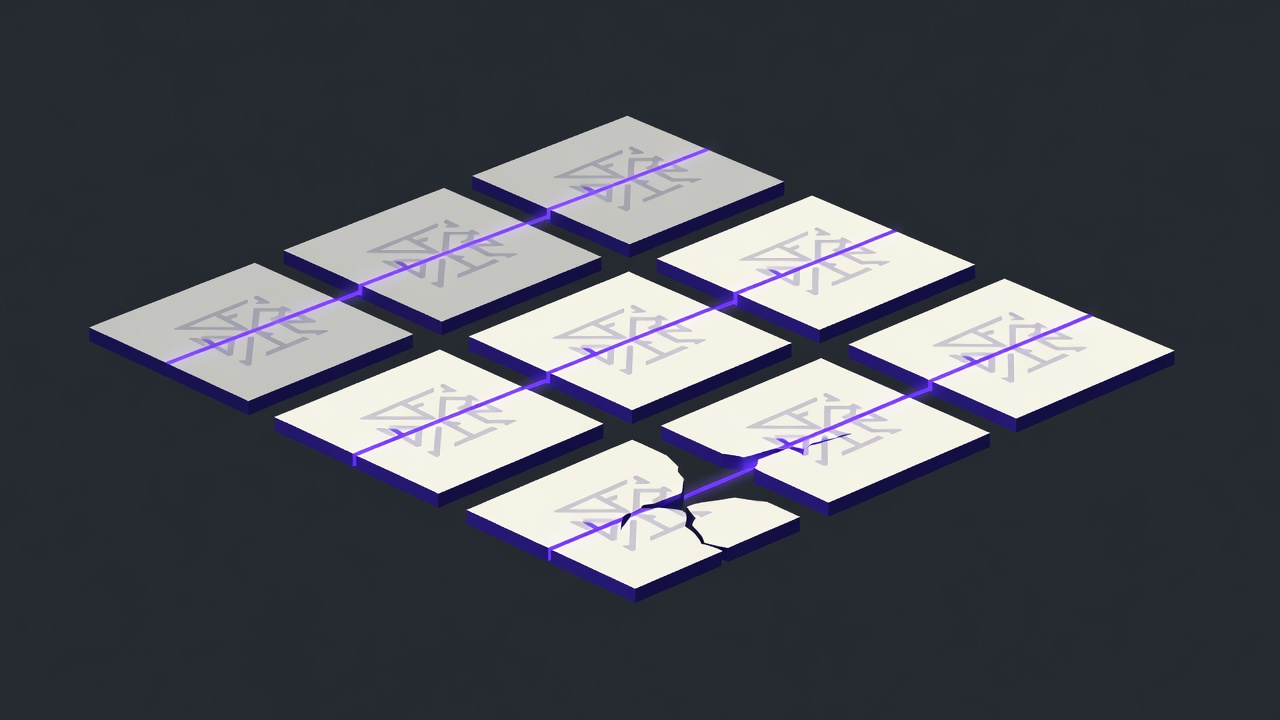
Anthropic has pledged to start marking material produced by Claude with machine-readable data. Generated text will carry embedded watermarks, and generated files will include digitally signed provenance metadata where the file format supports it. The stated reason is compliance with European rules on AI transparency. Nothing about this is visible to you: no label on the page, no change to the words, no notice in the document. It is a signal meant for software to read, not a stamp a person can see.
What it actually means for your business
If your business publishes text drafted with AI help — and by August 2026 most do — the working assumption changes from nobody can tell to a machine may be able to tell, sometimes. That is a smaller change than it sounds, but it lands on three kinds of businesses in particular.
- Agencies and freelancers who bill for writing. A ten-person content agency charging CAD 350 or Rs 15,000 for an article that took four minutes of prompting now carries a commercial risk, not a philosophical one. If a client's system reads a mark in the file you delivered, the conversation is about your invoice and your contract, not about ethics.
- Schools. A 600-student school will be pitched this news within the month as proof that AI homework is now catchable. It is not. See below before you approve a single purchase order.
- Clinics, accountants and anyone whose paperwork is regulated. A 30-bed clinic producing patient instruction sheets, discharge letters or insurance correspondence should notice that provenance now travels inside the file. That is mostly to your advantage: it quietly documents that a draft was machine-made and that a named human approved it before it went out.
What it does not mean, and who will overstate it
It does not hand you a detector. Anthropic marking its own output is not the same as you being able to check a document. The announcement covers Claude; it says nothing about the dozen other tools your staff, students and suppliers use, so the absence of a mark proves nothing at all. Nor does the announcement say how well these marks survive ordinary handling — paraphrasing, translation into Hindi or French, pasting into a CMS, a WhatsApp forward, or a document re-saved twice. Until someone publishes that, treat robustness as unproven.
Expect three groups to oversell it. Vendors selling AI-detection software to schools and HR departments, who now have a press release to wave. Consultants offering AI compliance audits built on a European rule that does not apply to a workshop in Nagpur or a clinic in Winnipeg unless it sells into Europe. And anyone claiming your search rankings depend on this — nothing announced here says that.
What a sensible owner does this month
- Write one page, not a policy binder: where AI drafting is fine (marketing, first drafts, internal summaries), where it must be disclosed (client deliverables), and where it is banned (contracts, clinical notes, anything you sign). An hour of work.
- Put a disclosure clause in freelance and agency contracts instead of a ban. Which tool, which parts. A ban you cannot enforce; disclosure you can.
- Schools: do not buy detection software off the back of this. Spend the same effort on assessment design — in-class drafts, a two-minute oral defence, document version history. That costs timetable, not fees.
- Never strip provenance metadata deliberately. It saves nothing today and is very hard to explain later.
- Keep a named human sign-off on anything with legal, medical or financial consequence. That single habit protects you regardless of what any watermark does.
And if you publish little and sell nothing into Europe, the honest answer is that nothing changes for you this month. Note it and move on.
Also worth knowing
-
Claude Code now acts without asking permission at each step
Anthropic made auto mode the default in its coding tool, so the agent carries out work without stopping for human approval on every action. If an agency or in-house developer builds your systems, ask them one question in writing: can that tool reach live customer data, or does it only work on a copy? If nobody is building software for you, this is not your problem.
finance.biggo.com ↗ -
Chrome ties your logged-in sessions to the device you use
Chrome has adopted device-bound session credentials, which defeat the stolen-cookie attacks now commonly used to hijack business accounts — email, ad accounts, banking portals — even when two-factor authentication is switched on. For most owners reading today, this is the single most useful item: make sure Chrome is actually updating on every staff machine, and stop treating 2FA as the end of the conversation.
Ars Technica ↗ -
The open web is losing its own record, and your pages are part of it
A heavily discussed argument this week: as AI-generated pages and AI answers crowd out the open web, the older record of it is quietly disappearing. The practical lesson is unglamorous — your price lists, case studies, reviews and how-to pages may exist in one place only, so export and keep your own copies rather than assuming a link will still resolve in five years.
Hacker News ↗ -
Anthropic launches a teacher product, joining Google and OpenAI in schools
Claude for Teachers puts a third large vendor into the classroom market. For a 600-student school the model matters far less than two things: whether lesson planning and marking help saves teachers real hours, and exactly what happens to student data. Get the data terms in writing, then pilot with two willing teachers for a term before anything school-wide.
News Channel 3-12 ↗ -
Google shows a medical AI holding real-time video consultations
Google's AMIE research system demonstrated live clinical video consultations in a first-of-its-kind study — in simulated settings, not with real patients. A 30-bed clinic should read this as a direction of travel for triage and intake over the next few years, not as something purchasable. Nothing here is approved to touch actual care.
Google AI ↗ -
OpenAI ships a cybersecurity-specific model for approved partners only
GPT-5.6-Cyber is available through OpenAI's Daybreak programme for authorized vulnerability research, exploit validation and security testing, restricted to vetted partners. You cannot buy it and do not need it; the relevant point is timing, because capability of this class does not stay on the defenders' side forever. Patching, backups you have genuinely restored from, and MFA get more valuable this year, not less.
OpenAI ↗ -
A 14MB model small enough to run on a phone or a machine on the shop floor
A developer released Needle2, an agentic model measured in megabytes rather than gigabytes, aimed at phones, wearables, home devices and robots. It drew a lot of attention and remains unverified by anyone other than its author. The idea worth filing is AI that runs with no internet connection and no per-use fee — useful eventually for a factory floor or a shop with patchy connectivity, but nothing to act on this month.
Hacker News ↗ -
AI finance work that ends in an editable spreadsheet, not a wall of text
A vendor case study describes AI carrying finance work from research through to editable PowerPoint decks and Excel workbooks with traceable sources. Discount it as a supplier's account of its own results, but keep the standard: any reporting or finance tool pitched to you should produce output you can check line by line back to a source. If it cannot, it is not fit for a board pack or a bank submission.
OpenAI ↗
How this briefing is put together
Every morning we read the day's AI announcements and reporting from the companies themselves and from the technology press, then pick the handful that actually change something for a working business. The analysis is ours and it is written for owners and managers, not engineers. Every story links to its original source above — read them, and disagree with us where we've got it wrong.